Applications and advantages of the PRS system
PRS can be installed on existing pipes or on new pipelines.
PRS benefits
Reduces excess pressure
PRS can continuously reduce pressure in a remotely monitored way, allowing the client to implement even complex management logic.
Energy production
It is possible to generate electricity while managing the water flow by converting excess pressure into electrical power, achieving an annual production-to-installed capacity ratio far superior to that of other renewable energy sources.
Replaces traditional control valves (needle valve, PRV, etc.)
PRS can give value to the potential energy of the water flow while maintaining the same control function as traditional regulation valves.
Respects the water network
Respects the original service of the water network, without interfering with its management, while adding value also through continuous monitoring of hydraulic parameters, for better infrastructure management.
Enhances existing infrastructure
The flexible installation of the PRS, thanks to its design for integration into the water system, combined with careful planning, allows existing infrastructure to be fully optimized.
PRS models
| Model | Head range ΔH (m) | Flow rate range (l/s) | Power range (kW) | RPM range | Face to face dimensions (mm) |
|---|---|---|---|---|---|
| D150 | 35-55 | 25-70 | 10-30 | 1500 | 900 |
| D200 | 20-95 | 40-160 | 10-100 | 750-1500 | 1200 |
| D250 | 20-95 | 50-200 | 10-150 | 500-1500 | 1500 |
| D300 | 10-95 | 65-350 | 10-250 | 375-1000 | 1800 |
| D400 | 10-95 | 140-500 | 15-450 | 375-750 | 2000 |
| D500 | 10-100 | 200-700 | 30-500 | 200-750 | 3000 |
Applications and installation versatility
The PRS is an extremely versatile system, designed to adapt to a wide range of hydraulic and plant scenarios. Thanks to its flexibility, it can be easily integrated into existing networks and configured according to the operational and energy requirements of the site.
It can be installed in:
- Water main and water distribution networks
- Water treatment plants
- Irrigation networks
- Industrial or municipal heating and cooling systems
- Networks with significant flow rate or pressure variations
Ideal for:
- Public or private water systems requiring dynamic pressure or flow rate regulation
- Networks subject to demand fluctuations with high energy recovery potential
- Water utility operators interested in harvesting the energy potential of existing infrastructure
Available configurations:
- Grid-connected plants (linked in parallel to the electrical network)
- Stand-alone systems (for self-consumption)
- Hybrid solutions (linked in parallel + local/battery storage)
Request a consultation
Fill out the form with your network data. The WEMED team will analyze your data to assess the feasibility of installing the PRS system.
Once you will have submitted the form:
- You will receive a comprehensive summary of the data provided.
- A PDF copy of your request will be automatically generated.
Our technical team will immediately begin to analyze the energy potential and economic benefits.
The system ensures the structured management of all requests, while guaranteeing speed, traceability, and continuous support.
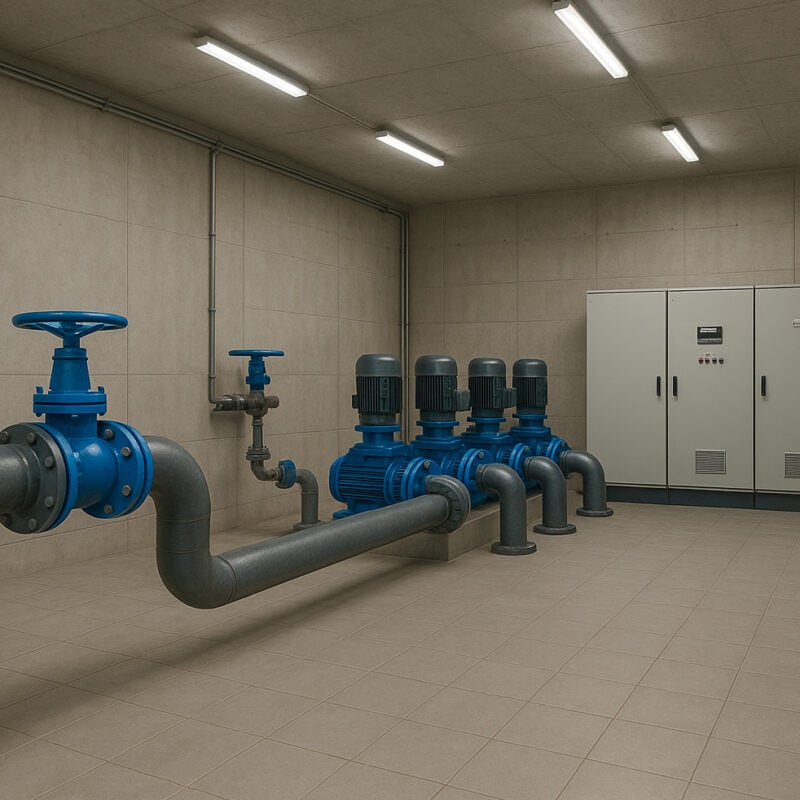
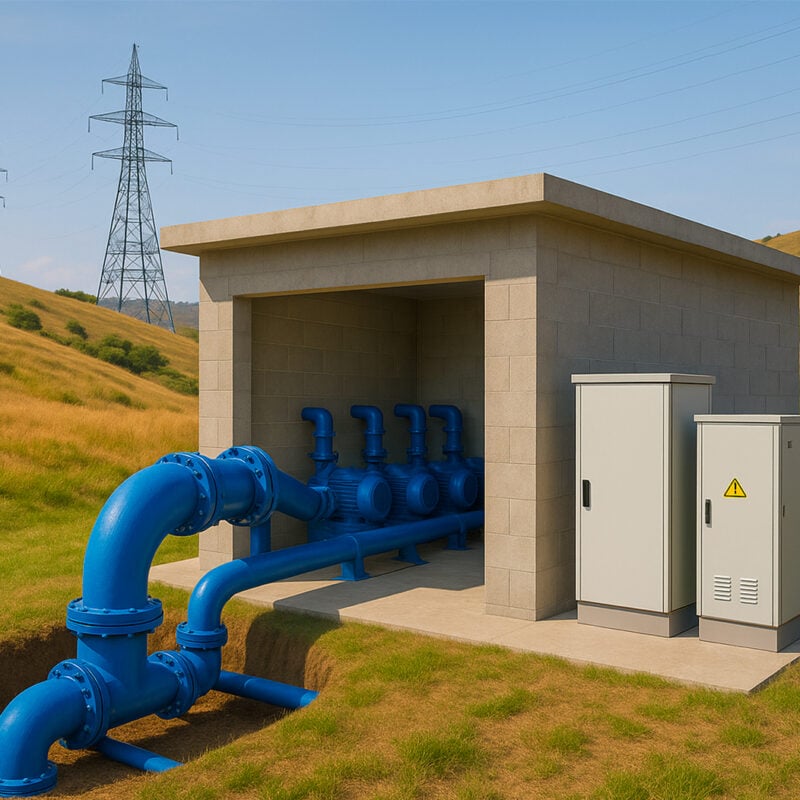
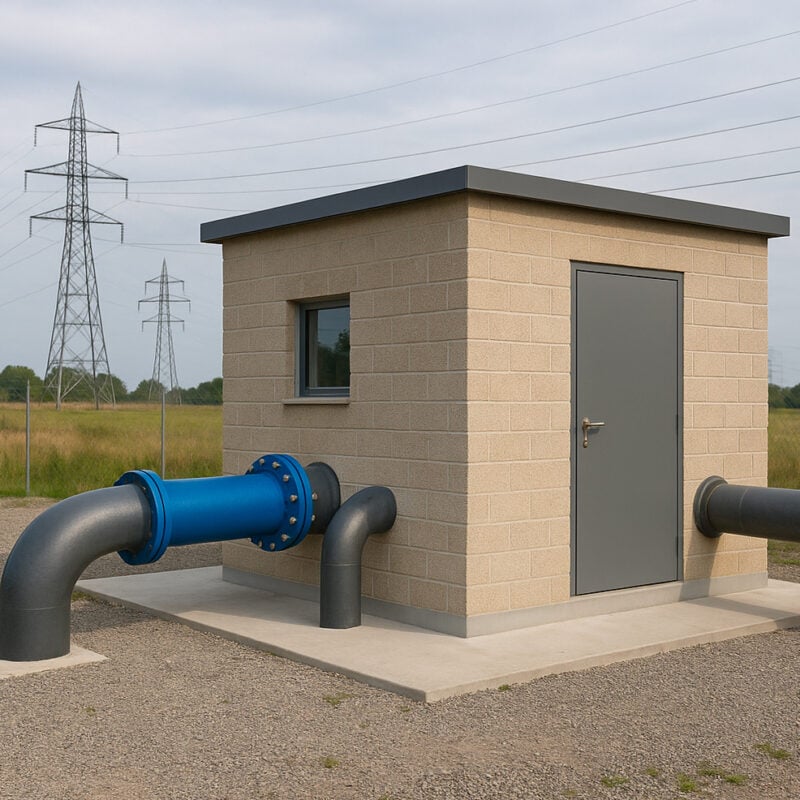
Standard installation layout

Configurations available
- Grid-connected systems (connected in parallel to the electricity grid)
- Stand-alone systems (for self-consumption)
- Hybrid solutions (parallel network + local consumption/battery storage)